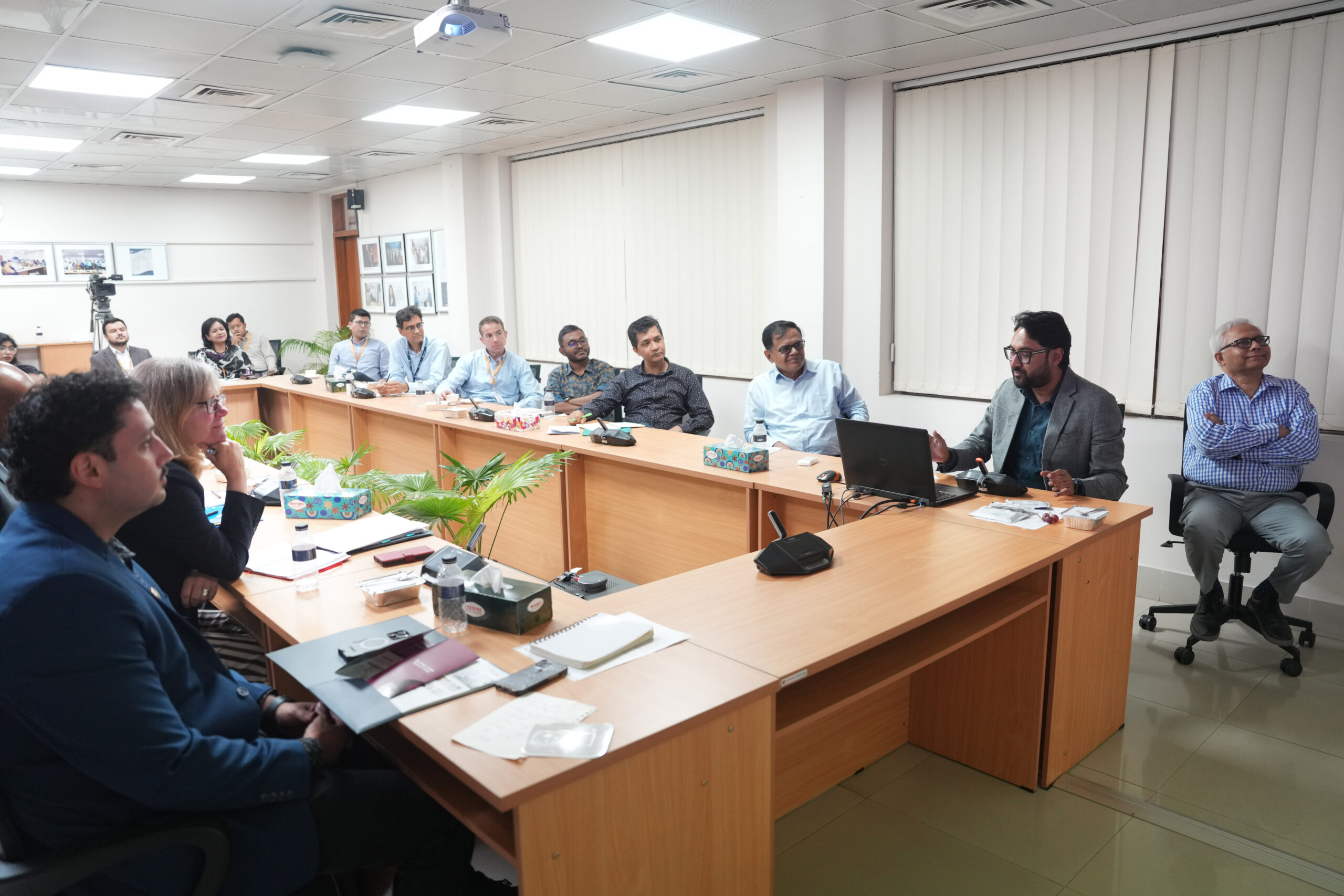
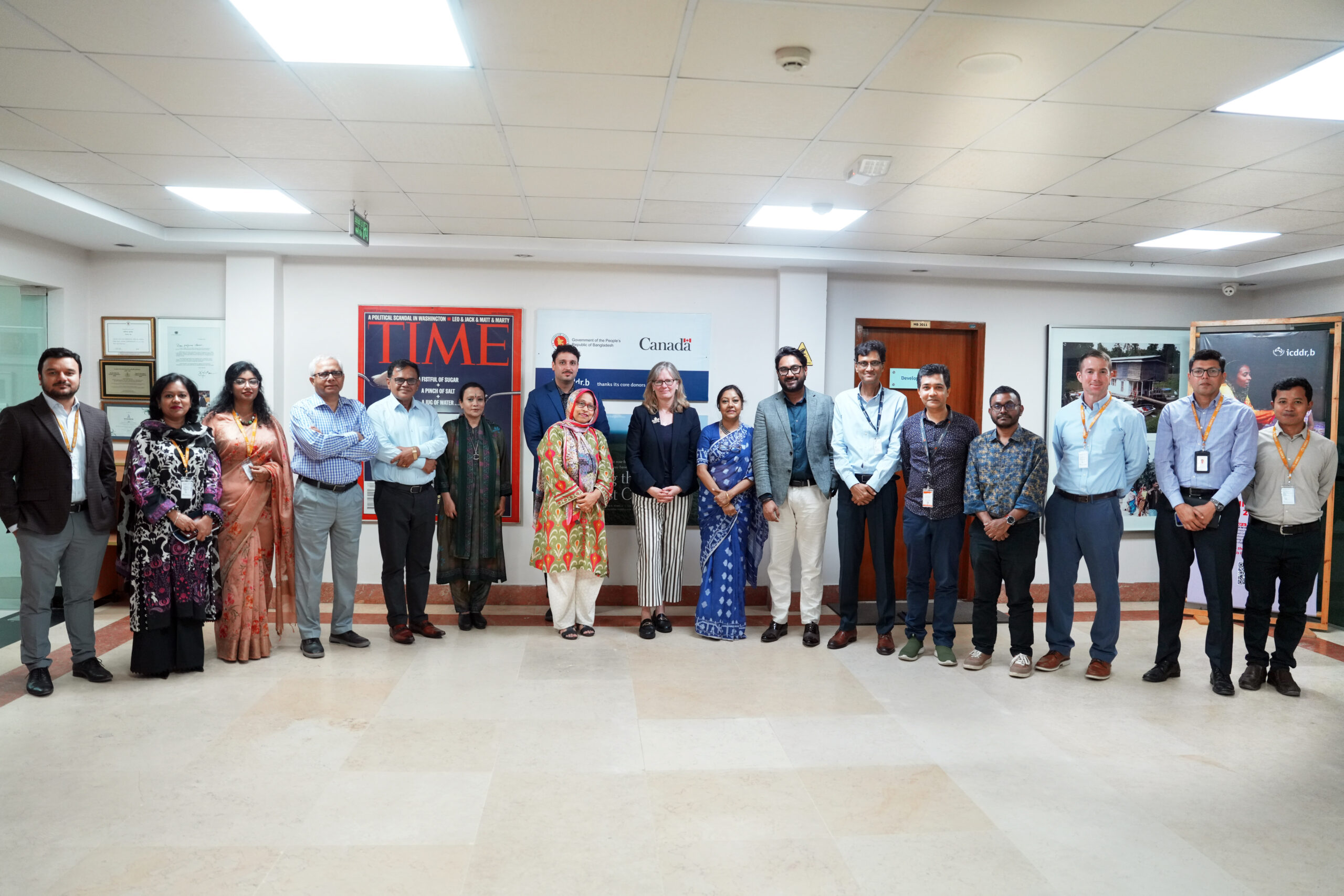
On 21 May 2026, representatives from the Government of Canada visited icddr,b in Dhaka to engage with leading nutrition and development organizations working to improve maternal and child nutrition in Bangladesh. The delegation included Ms. Leslie Norton, Assistant Deputy Minister for International Assistance Partnerships and Programming, Canada; H.E. Mr. Ajit Singh, High Commissioner of Canada to Bangladesh; and Mr. Edward Cabrera, First Secretary – Development (Health), Global Affairs Canada (GAC).
As part of a roundtable discussion on nutrition partnerships and priorities, IFPRI was represented by Dr. Moogdho Mahzab, Research Fellow and Acting Country Representative for Bangladesh, and Ms. Aklima Parvin, Senior Project Manager. The event brought together representatives from icddr,b, GAIN, Nutrition International, World Vision Bangladesh, and IFPRI to discuss Bangladesh's nutrition landscape and opportunities for collaboration to improve nutrition outcomes at scale.
During the session, Dr. Mahzab highlighted IFPRI's long-standing commitment to generating rigorous evidence that informs nutrition policy and programming in Bangladesh and beyond. Drawing on examples from the health, agriculture, education, food systems, and social protection sectors, he emphasized IFPRI's approach of working through existing large-scale systems to deliver cost-effective and sustainable nutrition improvements.
The presentation showcased several influential IFPRI-led studies that have informed national policies and programs. These included research from the Transfer Modality Research Initiative (TMRI), which demonstrated the effectiveness of combining cash transfers with nutrition behavior change communication to reduce child stunting and strengthen women's empowerment; the Agriculture, Nutrition and Gender Linkages (ANGeL) study, which highlighted the benefits of integrating nutrition and gender-sensitive approaches into agricultural extension services; and contributions to school feeding and infant and young child nutrition programming.
Dr. Mahzab also presented IFPRI's ongoing and future research portfolio, including the Jibon study, which is evaluating enhancements to Bangladesh's Mother and Child Benefit Programme, and several proposed initiatives focused on early childhood development, school meals, food safety, and environmental health. These efforts aim to generate timely evidence to support government decision-making and strengthen the effectiveness of large-scale nutrition interventions.
A key theme throughout the discussion was the importance of translating evidence into action through strong partnerships among government, research institutions, development agencies, and implementing organizations. Participants exchanged perspectives on emerging nutrition challenges, opportunities to strengthen existing delivery platforms, and priorities for future investments in nutrition and human capital development.
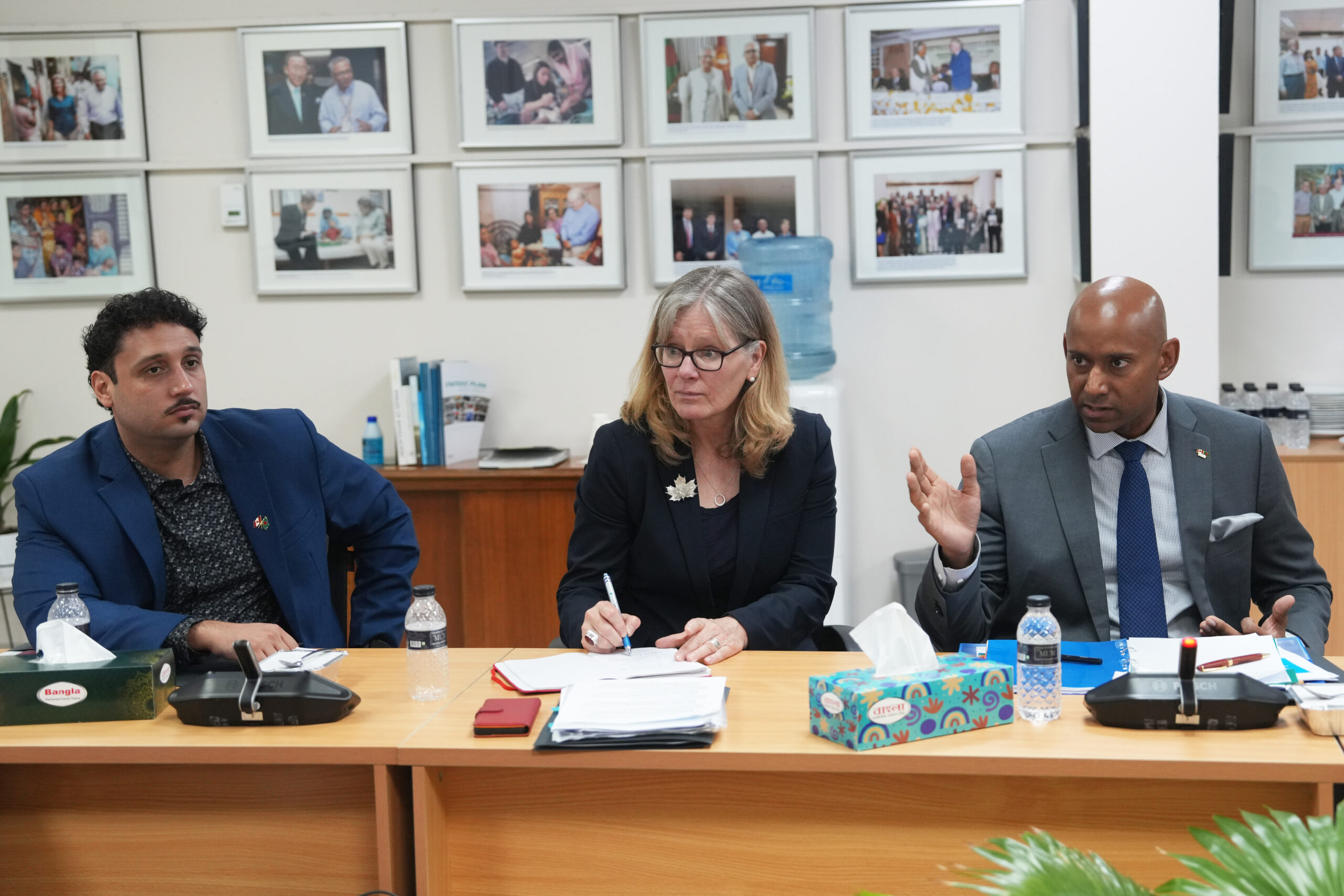
Assistant Deputy Minister, Canada Ms. Leslie Norton (in the middle)
In her closing remarks, Ms. Leslie Norton expressed appreciation for the presentations and emphasized the importance of integrated approaches to nutrition. Reflecting on her return to Bangladesh after three decades, she noted how encouraging it was to witness the dedication and commitment of organizations working to improve nutrition outcomes. She highlighted the value of combining professionalism with passion and recognized the role of evidence and collaboration in advancing sustainable development outcomes.
The visit provided an important opportunity for IFPRI and its partners to share evidence, discuss priorities, and explore avenues for continued collaboration. As Bangladesh continues to address complex nutrition challenges, IFPRI remains committed to supporting policymakers and development partners with high-quality research that helps translate evidence into effective, scalable solutions for improving diets, nutrition, and well-being.