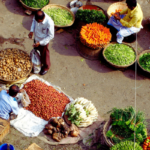
The CGIAR Research Initiative on Sustainable Healthy Diets through Food Systems Transformation (SHiFT) and two partners in Bangladesh recently formalized their commitment to strengthen the implementation of food systems transformation for sustainable and healthy diets in the country. The International Food Policy Research Institute (IFPRI), on behalf of SHiFT, signed Memorandums of Understanding (MoU) with the Bangladesh National Nutrition Council (BNNC) […]
Global Food 50/50 Launch Event (March 7)

Global Health 50/50, IFPRI, and UN Women Launch Event When: Mar 7, 9:00 – 10:30 PM (EST) More details and register: https://www.ifpri.org/event/global-food-5050-launch-event-0 The 2023/2024 report on the gender- and equity-related policies & practices of 51 global food system organizations. The Global Food 50/50 initiative monitors progress and holds food system organizations accountable for advancing gender-just […]
Op-Ed: Agricultural growth key to accelerated poverty reduction in Bangladesh
By Akhter Ahmed, Country Representative, IFPRI-Bangladesh The latest findings from the 2022 Household Income and Expenditure Survey (HIES), published by the Bangladesh Bureau of Statistics (BBS) in December 2023, reveal remarkable reductions in poverty. The official headcount rate for moderate poverty (the proportion of people living below the upper poverty line) decreased by 23.0 per […]
Blog – The impact of marriage timing on women’s agency: Evidence from rural Bangladesh

Early marriage remains a pervasive issue in developing countries, with an estimated 650 million women globally married before the age of 18. This is a particular challenge in South Asia, where the prevalence of child marriage is significantly higher than in other parts of the world, with one third of women between the ages of […]
Publication – Prevalence, trends, and inequality in noncommunicable diseases in Bangladesh
In December 2023, IFPRI researcher Md. Masum Ali and co-authors from Dhaka University and Lund University published the open access article, "Prevalence, trends, and inequality in noncommunicable diseases in Bangladesh: Evidence from Bangladesh Demographic and Health Surveys 2011 and 2017–2018" in Public Health Challenges. Abstract We investigated the change of the prevalence of noncommunicable diseases […]
- « Previous Page
- 1
- …
- 5
- 6
- 7
- 8
- 9
- …
- 68
- Next Page »