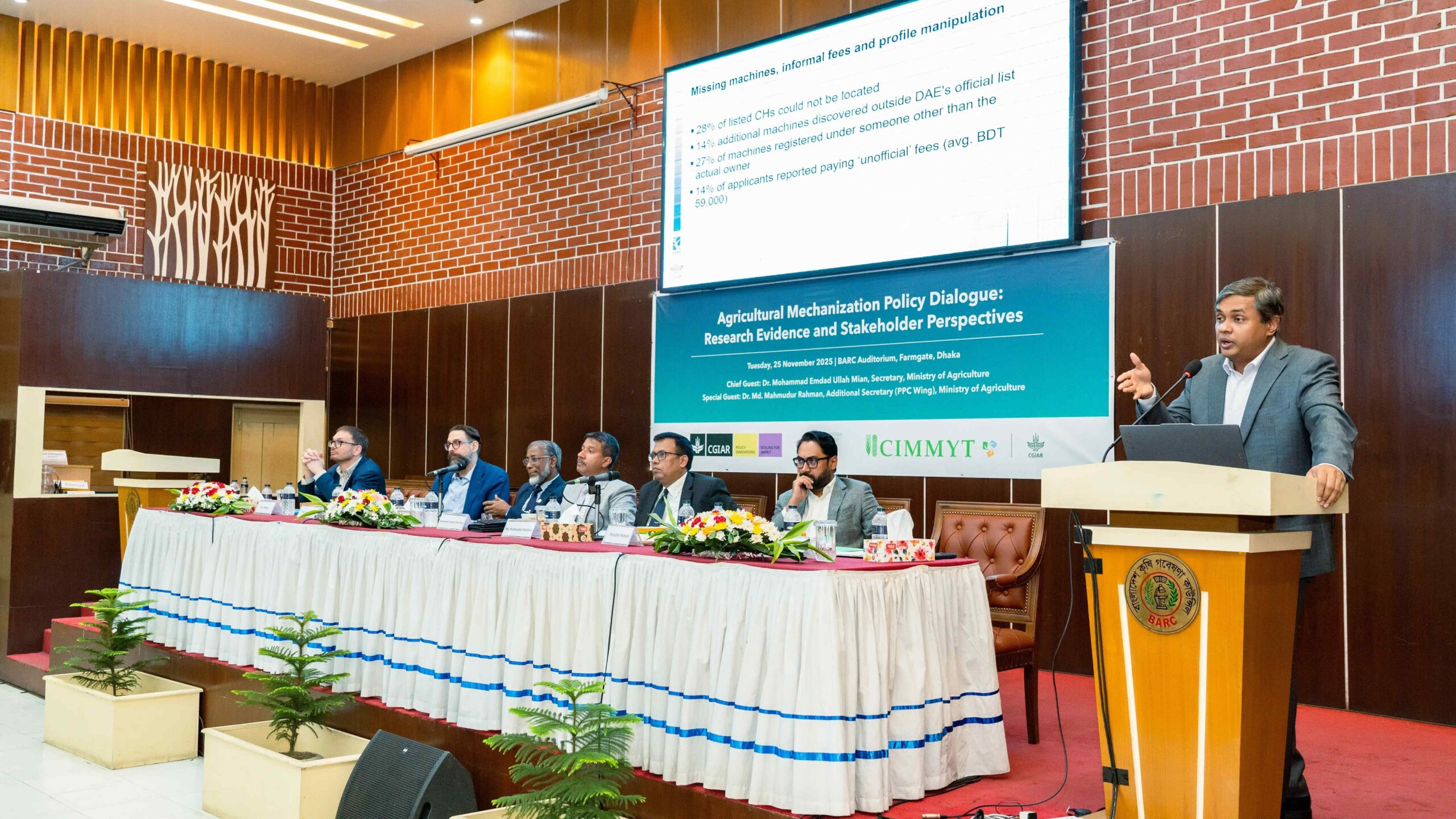
November 25, 2025, Dhaka, Bangladesh – The International Food Policy Research Institute (IFPRI) and the Centro Internacional de Mejoramiento de Maíz y Trigo (CIMMYT), with support from CGIAR and the Gates Foundation, hosted the seminar “Agricultural Mechanization Policy Dialogue: Research Evidence and Stakeholder Perspectives,” at the auditorium of the Bangladesh Agricultural Research Council (BARC) in Dhaka, Bangladesh.
In July, IFPRI and CIMMYT researchers collaborated to publish groundbreaking research on agricultural mechanization in their report “Agricultural Mechanization Policy in Bangladesh: An Assessment of the Phase III Support Program and Recommendations for Reform”. The event aimed to present critical findings from this unique mixed methods study, combining administrative data on over 35,000 distributed machines; a representative survey of nearly 1,000 Machinery Service Providers across 10 districts; panel data tracking over 2,000 nationally representative Boro rice-farming households; and 128 qualitative interviews, offering both quantitative rigor and qualitative depth.
The seminar opened with a welcome address from Dr. Md. Abdus Salam, Executive Chairman, BARC. Dr. Salam noted the continued importance of agriculture for the country’s economy and for livelihoods. He gratefully acknowledged the study’s findings on challenges related to subsidy targeting, cost-effectiveness, and equity issues. Dr. Salam remarked on the relevance of the research for BARC, stating, “BARC plays a central role in research coordination and in advising national policy. The evidence generated here gives us a concrete base to advocate for smarter subsidy design, better allocation, and more robust support systems.”
The policy dialogue opened with a series of presentations by IFPRI Research Fellows Dr. Mehrab Bakhtiar, Dr. Moogdho Mahzab, and Dr. Ben Belton. The presentations highlighted the mechanization subsidy program’s substantial reach, its positive effects on productivity gains, and its role in helping nurture viable machinery service provider (MSP) businesses. However, governance challenges undermined the program’s effectiveness, with evidence of untraceable machines and “ghost” allocations. Priority reform areas identified included reducing import tariffs as an alternative to direct subsidies, strengthening oversight through digitization, removing barriers to asset-based financing, and mandating after-sales infrastructure.
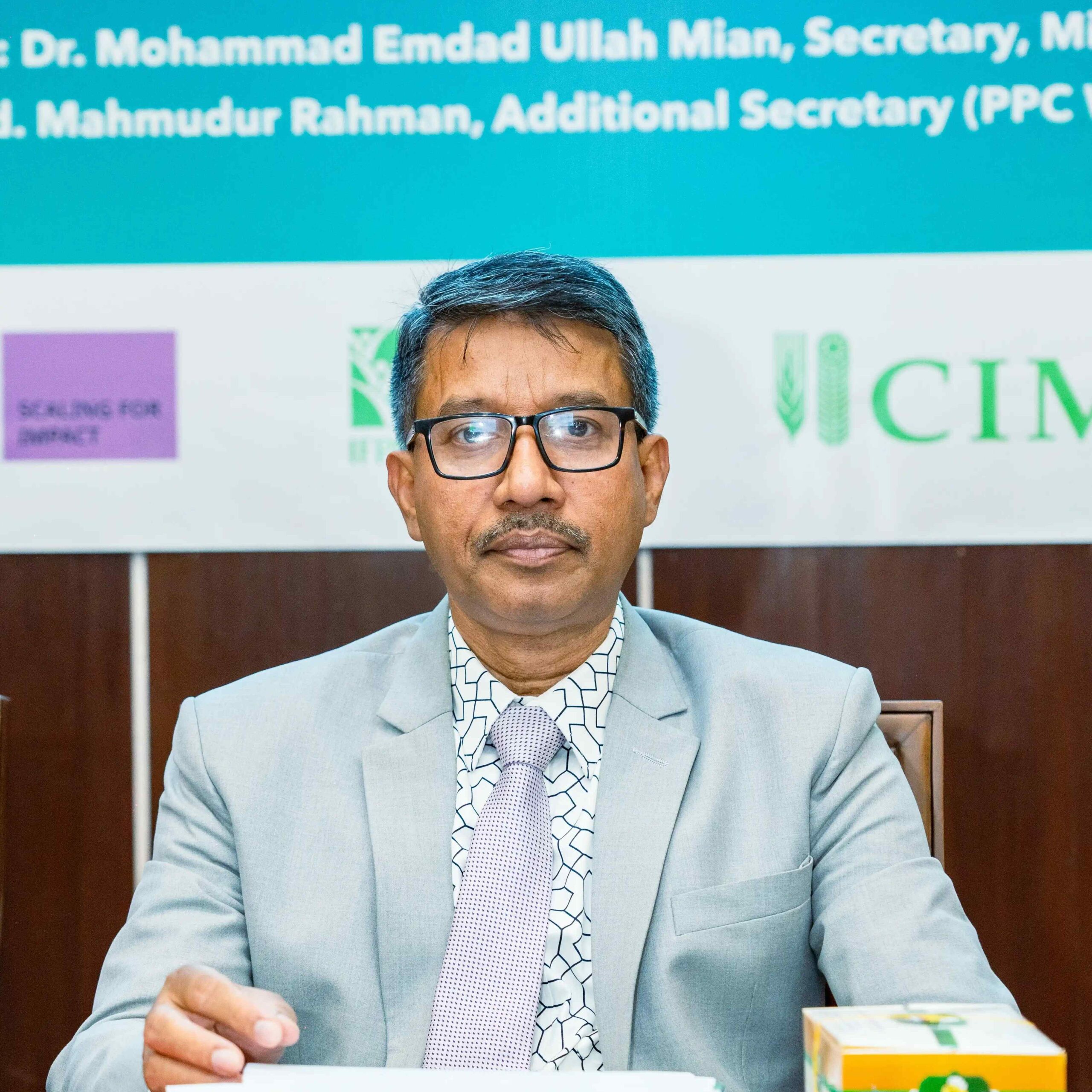
The Chief Guest, Dr. Mohammad Emdad Ullah Mian, Honorable Secretary, Ministry of Agriculture, Government of the People’s Republic of Bangladesh, commended the collaborative efforts of IFPRI, CIMMYT, and the Ministry of Agriculture in producing this research. He expressed his concern regarding governance issues in the outgoing mechanization subsidy program and mentioned that the current government had already taken steps towards ensuring accountability. He stated, “The government will continue to invest [in mechanization], but this should be a proper investment. We need to consider the trade-offs and opportunity costs associated with such an investment.” The Secretary also expressed his wish to see the focus of the research expanded beyond combine harvesters to other types of machines.
Commenting on the research findings, Dr. Wais Kabir, Consultant, CIMMYT echoed the sentiments of the Honorable Secretary regarding the need to address governance issues when designing future mechanization subsidy programs. He also acknowledged CIMMYT’s contribution to advancing mechanization under the CSISA-MEA program, which helped develop foundries and engineering workshops to strengthen the capacity of local mechanics.
Next, Mr. Owen Calvert, Project Leader, Sustainable Agrifood Systems, CIMMYT, presented a synthesis of feedback from stakeholder consultations held with machinery importers, financial actors, and MSPs. Among other issues, importers highlighted the need to reduce fiscal barriers to enable competitive pricing. Financial actors commented on mobilizing concessional and blended finance mechanisms. MSPs proposed the establishment of a centralized MSP support system.
The policy dialogue was enriched by the participation of a diverse audience of stakeholders including government, private sector, finance, MSPs, and academia. Moderated by Dr. Md. Ruhul Amin Talukder, Senior Policy Advisor IFPRI, an open discussion session saw several suggestions for areas of further research, such as comparing the efficacy of different service provision models, the viability of locally manufactured machines versus imported ones, and the need for a national mapping and stocktaking exercise of existing agricultural machinery. Some private sector actors noted their concerns related to the ending of the subsidy program, which is likely to hamper after-sales service delivery, among other issues.
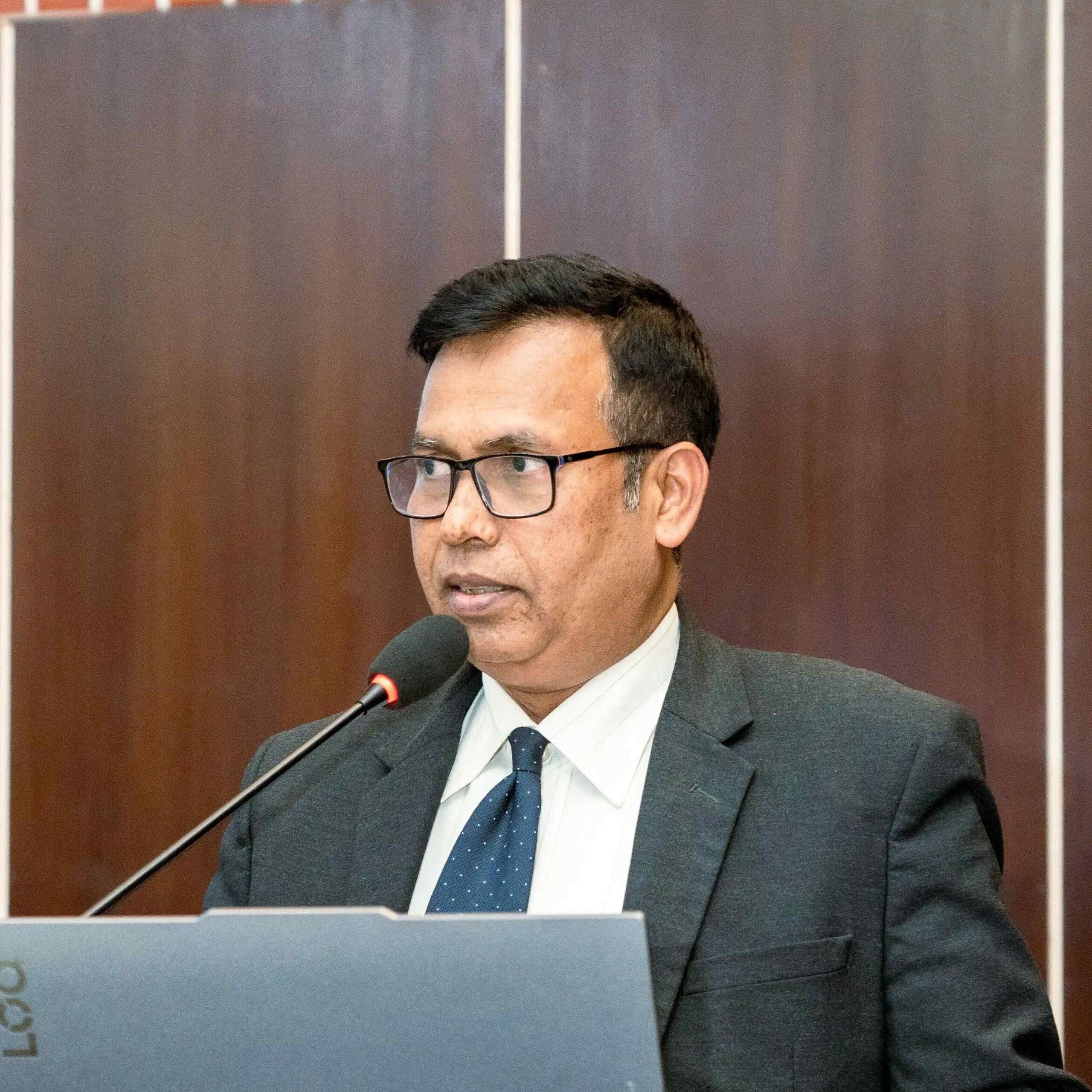
Following the open discussion, the Special Guest, Dr. Md. Mahmudur Rahman, Additional Secretary (PPC Wing), Ministry of Agriculture, emphasized the need for carefully designed feasibility studies prior to the development of large-scale subsidy programs to prevent governance and misallocation issues. “The intended benefits of this subsidy should have gone to farmers, but they have not—this was not the ultimate target of the mechanization program.” Dr. Rahman also noted the study’s revealed agricultural labor market impacts. Commenting on the way forward, Dr. Rahman spoke of the Ministry’s plans to continue promoting farm mechanization with a more considered approach, supported by sound evidence. “This study will definitely help us in articulating our future course of action.” He further noted planned efforts towards bridging agricultural credit gaps for farmers.
Finally, Dr. Timothy J. Krupnik, CGIAR Country Convener and CIMMYT Representative for Bangladesh, summarized the day’s discussions, noting that mechanization, in a scale-appropriate form, remains very important for the future trajectory of Bangladesh. He reiterated the importance of evidence-based policymaking and for a collaborative approach with local partners. “It’s not enough that we do studies and write reports and publish papers—what we must do is sit with our colleagues in-country to design the next phase and the next vision of agricultural mechanization policy in Bangladesh, and we need to take up that challenge.”